A Hidden Layer of Stubborn Staining Is Forming Along Bathroom Seals, and Ordinary Cleaning Often Leaves It Behind
And a Targeted Gel Method Is Helping Homeowners Lift Those Black Marks Without Hours of Scrubbing
 Posted By Isabelle Bouchard
Homeowners across Canada are making the same frustrating complaint:
Their bathroom looks clean, except for the dark stains that refuse to disappear.
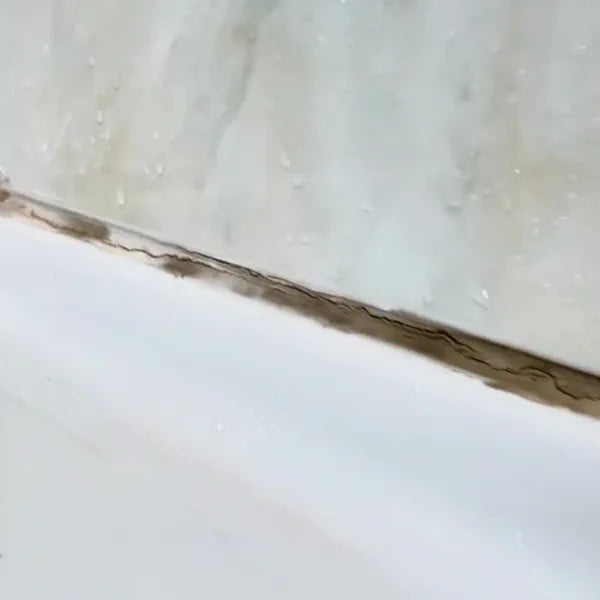
- The shower tiles look freshly washed, but a black line remains along the silicone seal.
- The grout looks better for a moment, but there are still stubborn spots in the corners.
- Even the rubber seals around certain household appliances develop discoloration that regular wiping doesn't seem to shift.

For families who take pride in a clean home, it has been embarrassing and somewhat confusing...
Because a clean bathroom is supposed to look clean.
And no matter how many times people scrub those narrow lines, the stains can remain.
For years, everyone pointed fingers at the usual suspects.
- Some blamed old grout...

- Others blamed hard water...

- And many assumed they just weren't scrubbing hard enough.


But behind the scenes, scientists studying how mould and other microorganisms persist on surfaces have been uncovering something that helps explain why damp corners are such stubborn places to maintain.
Not every dark stain is simply loose dirt waiting to be wiped away.
Sometimes the problem has become established right along a seam, fold or narrow joint, where moisture can linger and the surface is awkward to clean.
Researchers have studied how fungi can attach to surfaces and form structured communities known as biofilms.
NASA has even studied fungal biofilms under spaceflight conditions.
These investigations examine how growth develops on different materials, and why surface conditions matter.
That doesn't mean a shower and a spacecraft are the same environment.
And it certainly doesn't mean every black mark in a bathroom is a living biofilm.
But the broad lesson is familiar to anyone who has ever cleaned a bathroom:
Moisture, surfaces, and the places that are hard to reach all matter.
Because if dark marks keep showing up where your bathtub meets the wall...
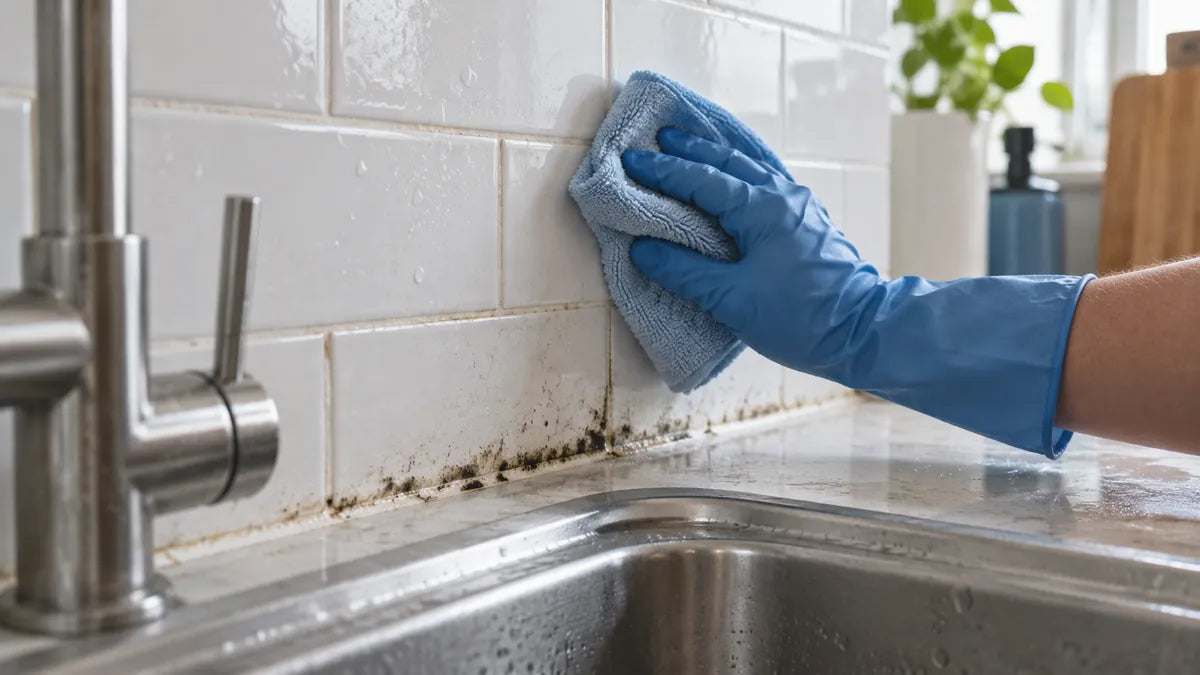
If the grout lines still look black even after you wipe the tiles...
Or if a narrow rubber seal is discoloured no matter how carefully you clean around it...
You may be dealing with a more stubborn surface-stain problem than ordinary loose dirt.
And the research into surface buildup helps explain an important distinction:
Cleaning a large, smooth surface is one job.
Treating a stubborn stain on a narrow joint is another.
But before we get to the targeted method that can help, you need to see what is actually happening around the shower or sink you clean every week.
Because once you understand why these dark marks are so stubborn, the frustration starts to make sense.

And you realize why wiping the tiles doesn't always clean the seal between them.
For generations, people assumed bathroom cleaning was straightforward.
- Spray the surface.
- Scrub it down.
- And rinse everything clean.
But a modern bathroom isn't made of one continuous, smooth material.

Tiles meet grout. Tubs meet silicone caulk. Windows meet their frames.
And showers are full of edges, corners and seams that regularly get wet.
So even when the main surfaces look spotless, the narrow lines between them can tell a different story.
Water can linger along a joint.
Soap residue can collect in a corner.
And on certain surfaces, dark staining can develop or remain after ordinary cleaning.
Over time, what started as a tiny mark can become the one thing you notice every time you walk into the bathroom.
So every shower can add a little more moisture to a problem area.
The tiles can dry while the corners remain damp.
The visible surfaces get wiped, while the stained line gets less direct attention.
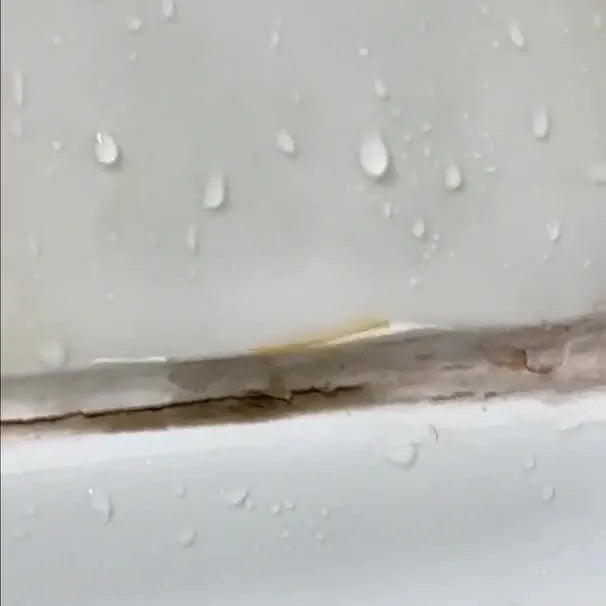
And piece by piece, the bathroom stops looking as fresh as it should.
Not because the homeowner never cleans.
But because the material, location and type of stain make that spot harder to treat.
Which is why the same black line can survive another cleaning day. And another.
This leads to the question almost every homeowner eventually asks:
If the bathroom is clean, why won't those black stains disappear?

The answer is simpler than most people expect:
Because some of the usual "fixes" are better at cleaning broad surfaces than treating a stubborn stain along a narrow joint, things like:
- Spraying general bathroom cleaner across the tiles
- Rinsing everything down with hot water
- Scrubbing harder with an old toothbrush
- Wiping the shower door and wall panels
- Trying another household cleaning spray
- Deciding the entire seal needs to be replaced
Those methods can remove ordinary grime, and proper cleaning and drying are important.
But they don't all give the stain the same kind of treatment.

A thin cleaner can run away from a vertical grout line before you've finished with the rest of the wall.
A brush can reach the surface, but repeated scrubbing can be frustrating, and it can damage aging caulk if you keep attacking it.
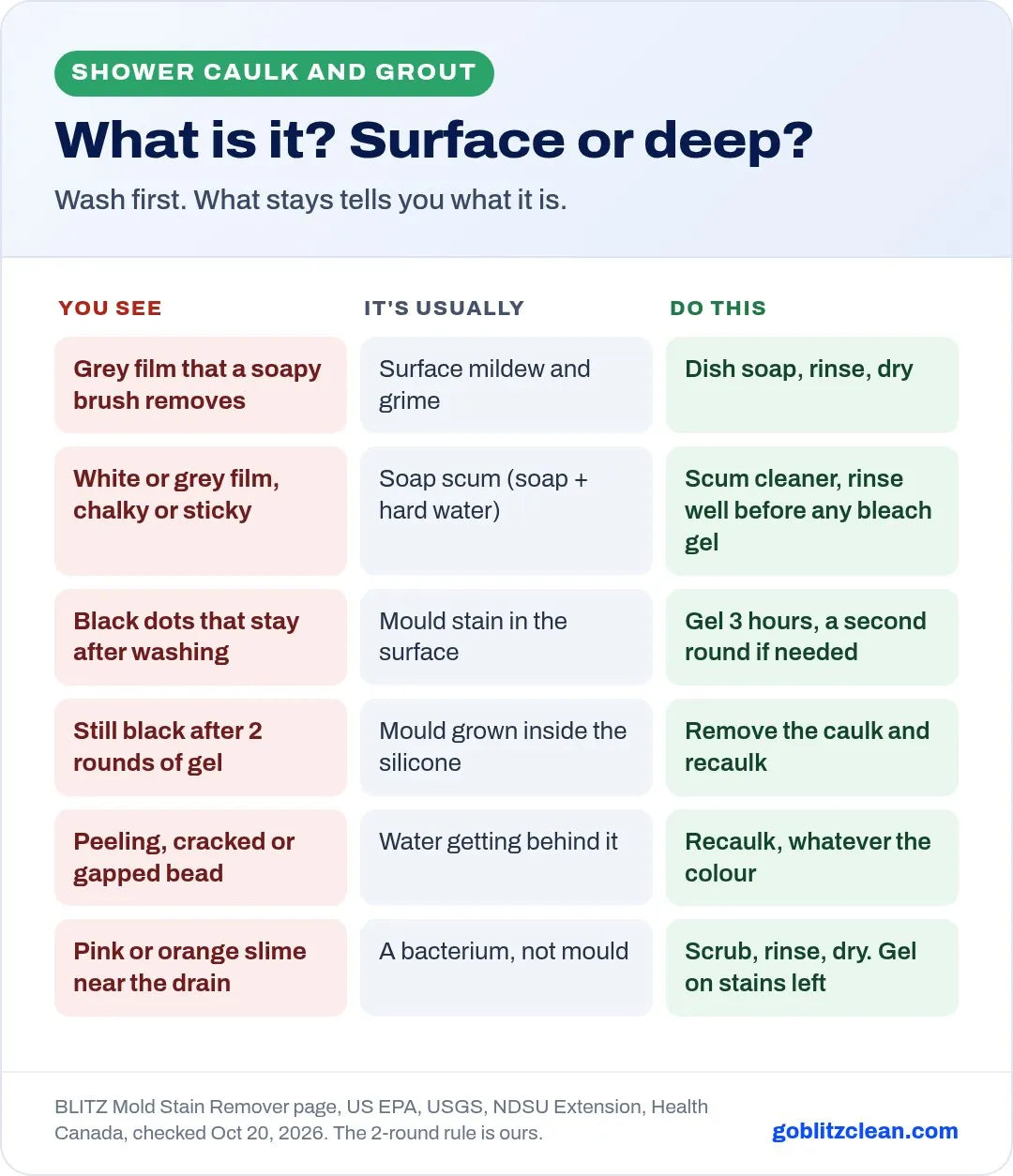
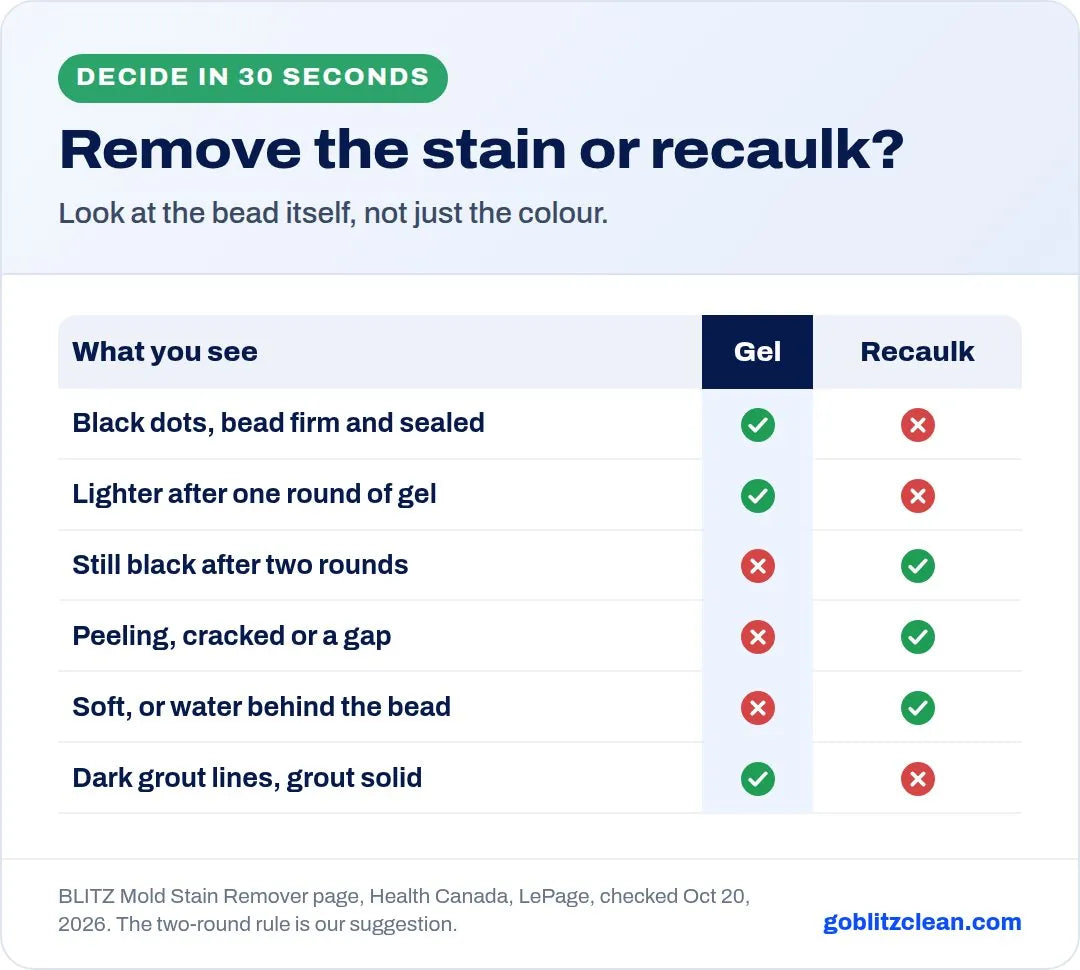
And if the silicone is already cracked, peeling or stained throughout, replacing the damaged material may actually be the right answer.
But for an intact, compatible surface with a treatable stain, there is another option before jumping straight to repairs.
The important question isn't just how strong a cleaner is.
It's whether you can put the right product directly on the stained line and keep it there for the required time.
Because the corners of a bathroom aren't flat countertops.
Some are vertical.
Some sit in awkward folds.
Some form narrow beads where a liquid spray quickly drips away.
And treating those stains calls for a different application method.
This is the detail most homeowners overlook.
The problem isn't always that they haven't bought a strong enough cleaner.
Sometimes it's that the cleaner doesn't stay precisely where the stubborn mark is.
That difference changes how you approach the job.
Instead of repeatedly spraying an entire shower... you focus on the actual line that needs attention.
Instead of scrubbing that same mark over and over... you allow a suitable product to remain in contact with the stain, according to its instructions.

And instead of immediately assuming the caulk has to come out... you first see whether the surface staining responds to an appropriate treatment.
This is the contact-time difference.

- The first part is putting the treatment exactly where the stain sits.
- The second is keeping it there long enough to work.
- The third is using a stain-lifting ingredient suited to the surface, before wiping and rinsing it away.
- Together, they turn a frustrating all-over scrubbing job into a more focused treatment for compatible caulk, grout and seals.
This is why the form of the cleaner matters just as much as the way it's applied.
The active chemistry tackles the visible stain.
The gel consistency helps it remain in place.
And the waiting period gives the product time to do its job while you aren't standing there scrubbing.
That doesn't mean a gel can repair water damage, fix a leak or restore silicone that has already failed.
It means an intact, stained surface can be treated as a stain problem first.
A narrow stain needs a treatment that stays on it
The only remaining question was whether anyone could make this kind of targeted stain treatment easy enough to use around an ordinary home.
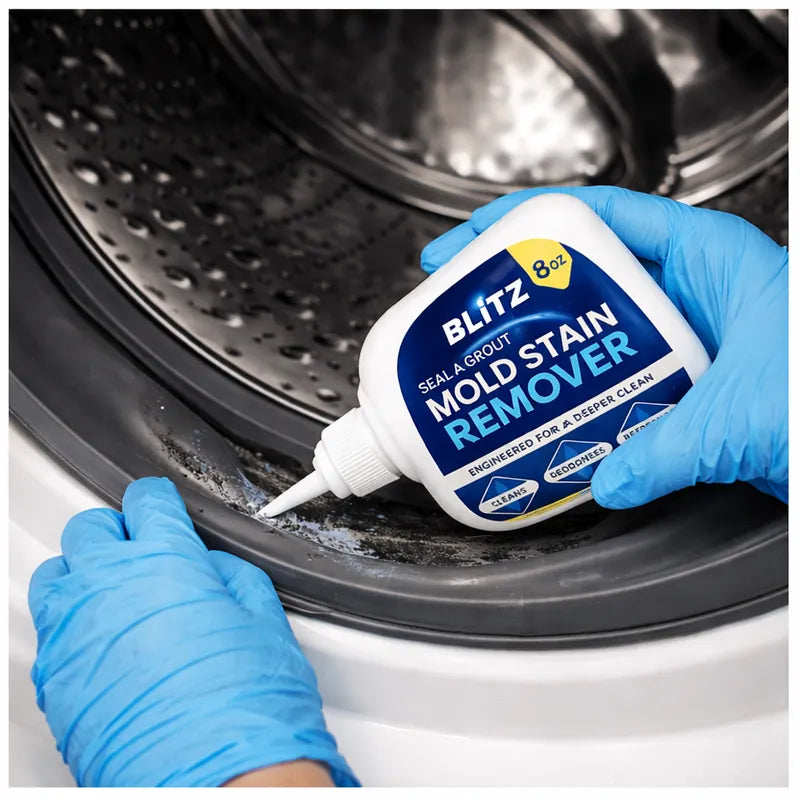
A Canadian cleaning brand recognized that problem and developed a thick gel designed to stay on narrow, stubborn stains.
- A precise application.
- A clear waiting period.
- And a simple wipe-and-rinse finish.
It is especially suited to the places homeowners have the hardest time scrubbing: the caulk around bathtubs, the grout lines between tiles, and compatible seals with those frustrating black or pink marks.
The method uses an established stain-removing ingredient in a form that is easy to apply along a narrow line.
Here is how it works:
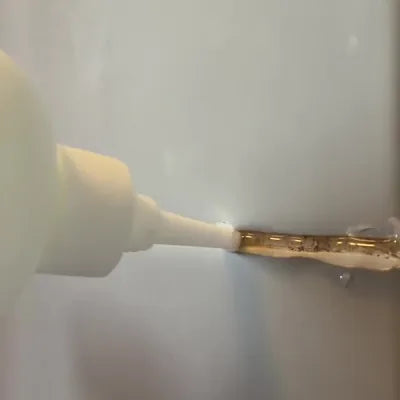
A thick gel stays where you apply it. Instead of spraying the entire bathroom, you place it along the dry, stained joint or compatible seal.
Sodium hypochlorite, the chlorine-based stain-removing ingredient, helps break down black and pink surface discoloration.
The gel is left in place for 3 hours, following the BLITZ directions, so the treatment stays in contact with the stained line instead of running off.
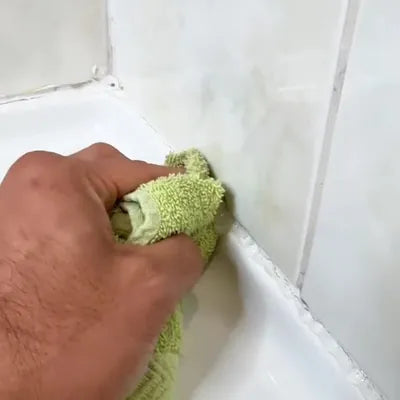
Wipe it off and rinse thoroughly. Let the area dry and check the result. Older, deeper stains may need a second round; damaged caulk needs replacing.
The formula also contains sodium hydroxide, which keeps the chlorine-based cleaner stable in the bottle.
It works on the visible stain along the joint, not just the large tile surface around it.
The narrow line that draws your eye every time you enter the room.
The small detail that makes the rest of your cleaning effort feel unfinished.
And now homeowners can use this targeted method in bathrooms and other suitable places around their homes.
If you have ever wondered why the shower looks clean for a moment, yet the same dark caulk line is still there...
A targeted, long-contact stain treatment may be the missing step.
That solution is available under a name you may already have seen online:
BLITZ Mold Stain Remover Gel.

It comes from a family-run Canadian cleaning company based in Laval, Québec, that helps households care for the places and appliances they use every day.
As customers described stained shower caulk, dark grout lines and seals that never quite looked clean, the company focused on making a targeted treatment easier to apply.
They saw a familiar pattern in the problems homeowners were describing.
They saw how much effort people spent scrubbing the same narrow lines.
And they saw that a standard spray wasn't always the most practical way to keep treatment directly on a stubborn stain.
So BLITZ offered a thick gel in a precision-tip bottle that lets homeowners apply it just where it's needed.
It doesn't require tearing out good caulk merely because the surface looks stained. And it doesn't ask you to scrub nonstop while it works.
Instead, you apply the gel, allow the three-hour contact time, then wipe and rinse.


People weren't just buying another all-purpose bathroom spray.
They were finally treating the stubborn line itself. And seeing what an ordinary rinse or another quick pass with a brush hadn't accomplished.
Bathtub Caulking
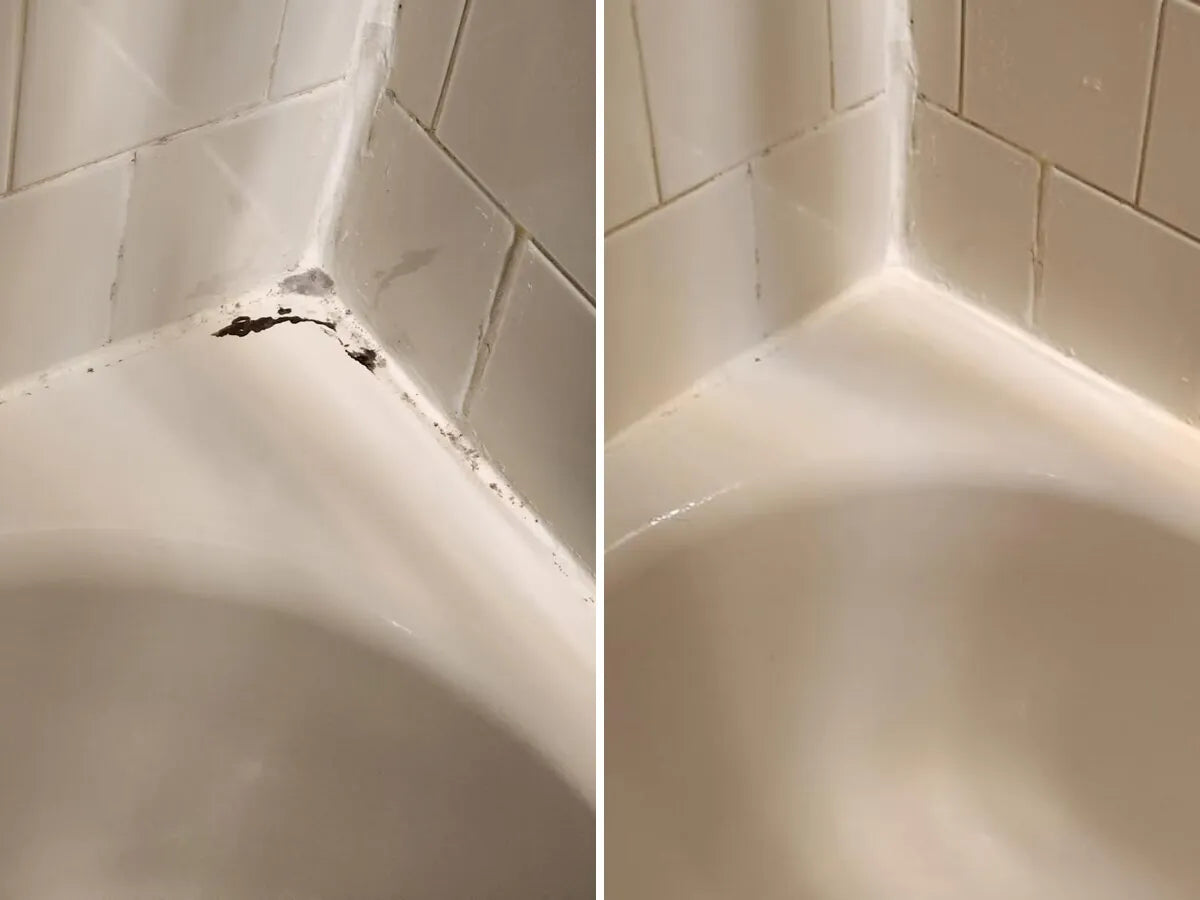
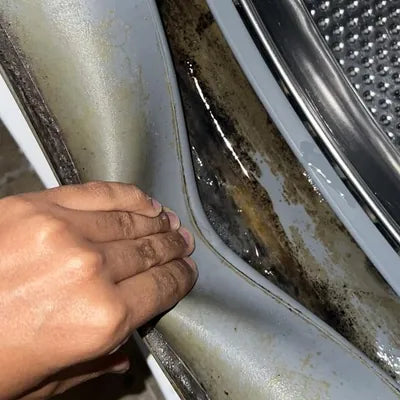
Washing Machine Door Seal
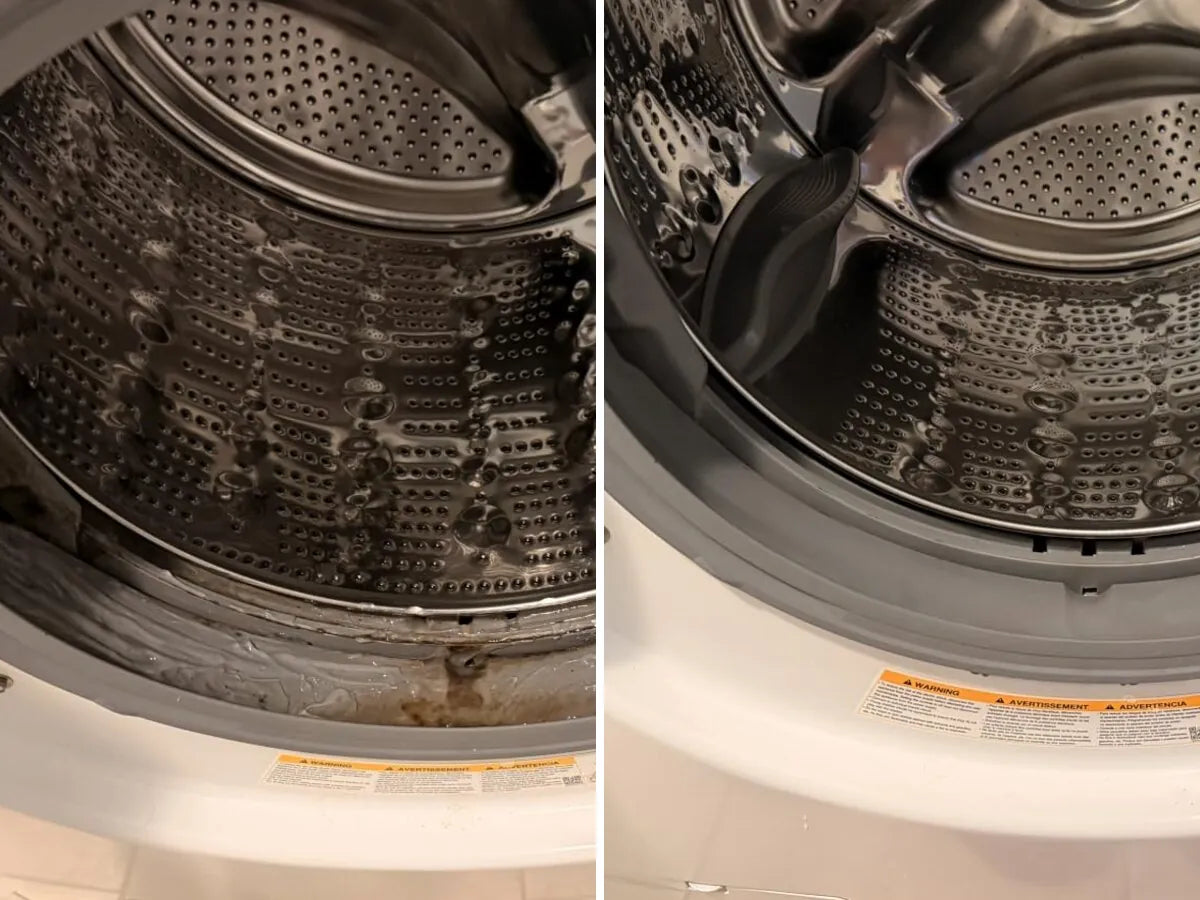
Check that your seal's material is compatible first.
Shower Grout
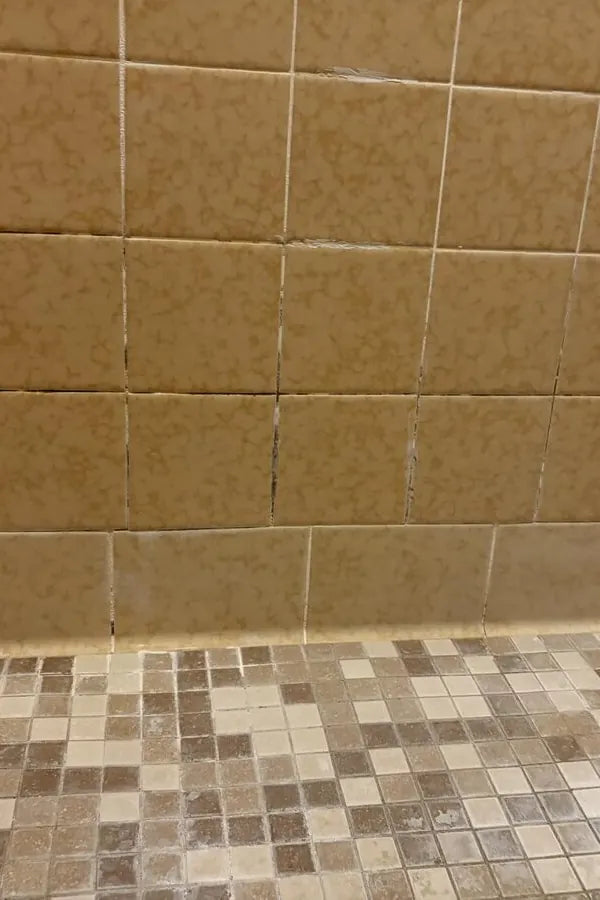
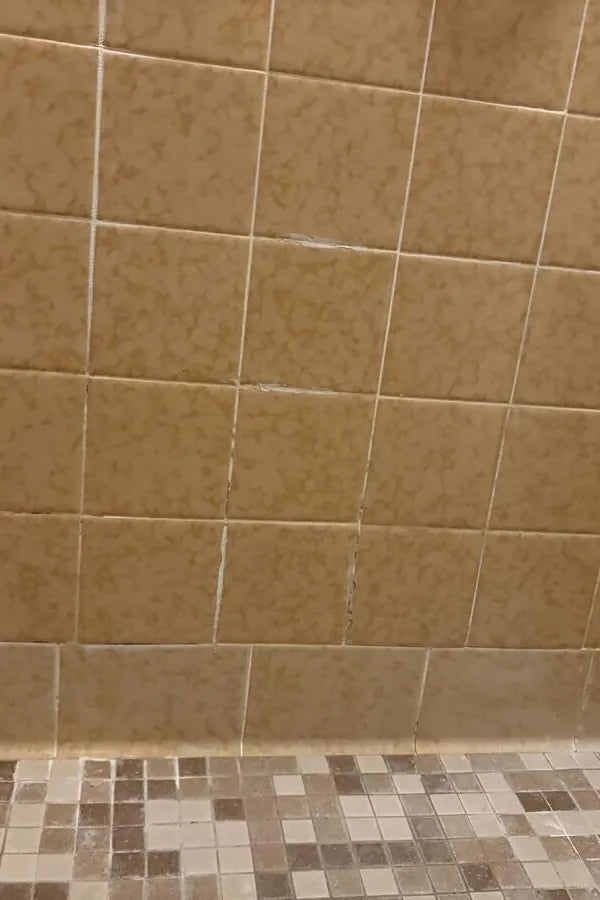
Real BLITZ customer photos. Results vary with the stain and the surface.
For people who have been staring at the same black line after every bathroom clean, that kind of visible improvement is the result they're looking for.
“I used this on the grout in my shower and it stuck to the vertical surfaces without running or dripping… it helped lift discoloration with minimal scrubbing.”Marianne C., BLITZ customer
The company also reports that 97% of 60 surveyed customers saw visibly cleaner grout, seals and caulk. Those are self-reported customer results, not a laboratory test, and individual outcomes vary.
If you want to see whether this targeted approach works on the compatible stained surfaces in your home, you can find it on the official BLITZ website.
The deal below is available exclusively on the official BLITZ website.
And right now, there's a Buy 2, Get 1 Free offer for homeowners who want to tackle more than one problem area around the house.
Buy 2, Get 1 FreeThree 237 mL bottles: 711 mL of targeted stain-removing gel for bathroom caulk, grout and other suitable surfacesThree bottles are CA$59.90, instead of CA$89.85 at the regular price of CA$29.95 a bottle.
It also comes with a 30-day money-back guarantee, and orders of CA$40 or more ship free in Canada.
Unlike washing-machine tablets, this isn't a product to use on a fixed weekly schedule. It's a targeted treatment for suitable visible stains, followed by normal cleaning, thorough drying, and fixing the moisture conditions that caused the problem.
Important: BLITZ Mold Stain Remover is a chlorine-based gel. Wear gloves and eye protection, ventilate the room, and never mix it with vinegar, ammonia, acids or other cleaning products. Follow the label, and keep it off fabric and delicate surfaces. For peeling caulk, ongoing leaks or large or recurring mould, cleaning the stain alone is not the solution.
Prices and availability can change.
You can check availability and current pricing through the link below.
Click here to see if BLITZ Mold Stain Remover Gel is in stock Check Availability