A Hidden Layer of Buildup Inside Modern Toilets May Explain Why That Stubborn Ring Keeps Coming Back
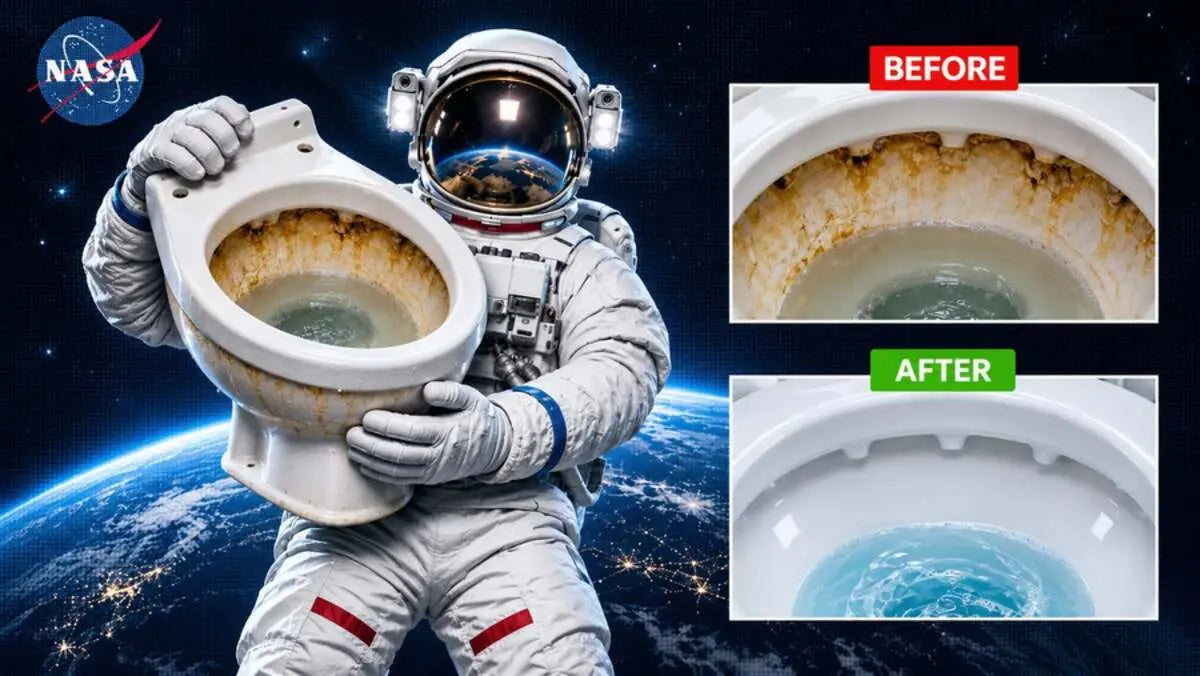
And NASA’s Research on Hidden Buildup Highlights Why Cleaning With Every Flush Makes More Sense Than Repeated Scrubbing
 Posted By Isabelle Bouchard
Homeowners across Canada are familiar with the same frustrating problem:
Their toilet looks dirty again just days after they cleaned it.
- A bowl that was spotless on Sunday starts to develop a faint yellow ring by Wednesday.
- Streaks appear beneath the rim, even though the toilet was just scrubbed.
- And the bathroom that smelled fresh after cleaning slowly loses that fresh feeling.

For families who take pride in a clean home, it can be embarrassing and somewhat confusing...
Because a freshly cleaned toilet is supposed to look clean.
And no matter how often people scrub the bowl, the same problem can keep returning.
For years, people pointed fingers at the usual suspects.
- Some blamed hard water...
- Others blamed how often the toilet was being used...
- And many assumed their toilet cleaner simply wasn't strong enough.
But there is another part of the problem that many homeowners overlook.
It isn't always about how well they cleaned the toilet in the first place.
It's about what happens inside the toilet during the days that follow.
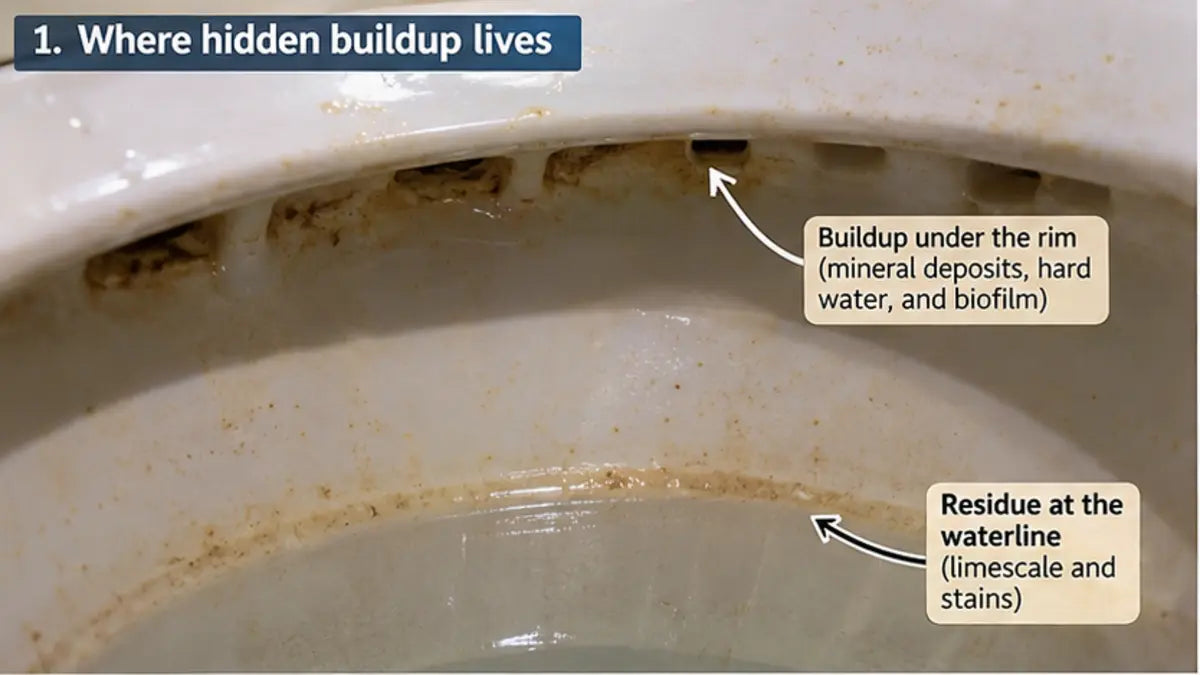
Look at what is happening inside a toilet between cleaning days, and one conclusion stands out:
The very places water passes through and collects can become the places where residue gradually builds up.
Water enters the bowl with every flush.
Minerals in that water can collect on the porcelain.
Residue can remain on surfaces that are difficult to reach with a brush.
And water sits in the bowl for hours at a time, even when nobody is using it.
The challenge of keeping frequently wetted surfaces clean isn't limited to bathrooms.
NASA researchers have studied a related maintenance challenge inside the water systems used aboard the International Space Station.
They found that microbial communities can attach to internal surfaces and accumulate as biofilms, even inside carefully engineered water systems.

NASA's research concerns spacecraft water systems, not household toilets. But it illustrates an important distinction:
Water passing through a system does not, by itself, guarantee that its surfaces stay free of buildup.
And that distinction matters in the bathroom, too.
Because if that yellow ring appears again shortly after cleaning...
If you notice streaks forming beneath the rim...
Or if the bowl starts to look less fresh before the next cleaning day...
You may be dealing with more than a one-time cleaning problem.
You may be dealing with a maintenance problem.
And the difference between cleaning a surface once and maintaining it over time is the first clue in understanding why.
But before we get to the cleaning method that addresses this problem, you need to see what is actually happening inside the toilet sitting in your bathroom.
Because once you understand how this buildup returns, the frustration finally starts to make sense.
And you realize why your toilet cannot simply flush itself clean.
For generations, people assumed that keeping a toilet clean was straightforward.
- Add toilet cleaner.
- Scrub the bowl.
- And flush everything away.
The porcelain looks white again.
The ring disappears.
And for a while, the whole bathroom feels fresher.
But the moment the cleaning is finished, the toilet goes back to being used just as often as before.

Every flush brings fresh water into the bowl.
That water can contain dissolved minerals, depending on where you live.
Some of those minerals can be left behind as water evaporates or repeatedly contacts the porcelain.
And in places where water sits, or where the brush doesn't easily reach, residue can begin to collect again.
So every day creates another opportunity for buildup.
Water repeatedly touches the same line around the bowl.
Flush water passes beneath the same rim.
And the bottom of the bowl stays wet between uses.
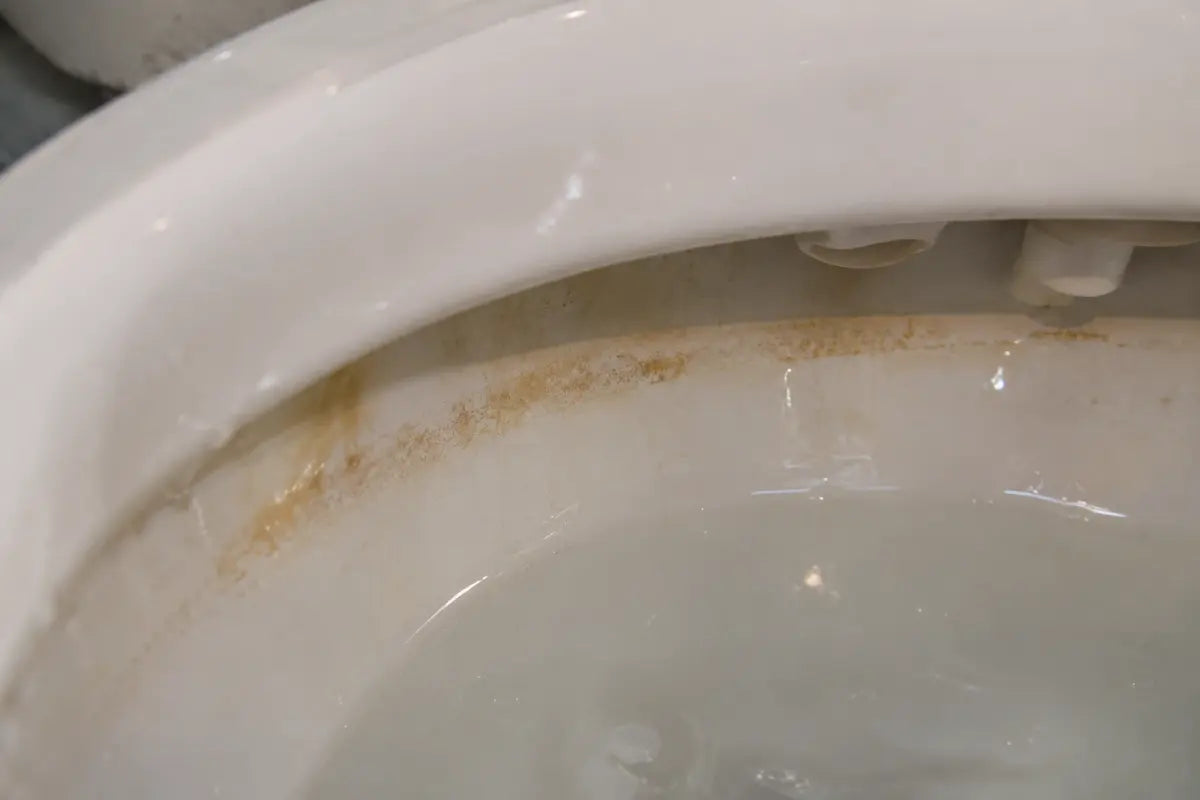
Little by little, that freshly cleaned appearance can begin to disappear.
At first, the change is barely noticeable.
A faint yellow line.
A small patch of residue.
A streak that wasn't there a few days earlier.
And before long, you're looking at the same bowl you thought you had just finished cleaning.
Which is why the problem feels so stubborn.
And why even a thorough scrub may not be enough to keep the bowl looking the way it did on cleaning day.
This leads to the question almost every homeowner eventually asks:
If I just cleaned the toilet, why does it already need cleaning again?

The answer is simple:
Because most of the cleaning methods we were taught are designed to deal with the buildup that's already there.
Things like:
- Scrubbing the bowl with a brush
- Applying a liquid toilet cleaner
- Using a suitable limescale remover
- Wiping the areas beneath the rim
- Running another flush to rinse everything away
And all of it can be helpful, because it can make the toilet look clean again.
But a one-time clean and an ongoing maintenance routine are two different things.
Once the cleaner has been flushed away, that particular cleaning treatment is finished.
The next flush brings in ordinary water.
The toilet continues to be used throughout the day.
And the same conditions that contributed to the buildup can still be present.
That's the part of the problem that a stronger scrub doesn't necessarily solve.
It's not that a toilet brush doesn't work.
It's that it only works when somebody picks it up and uses it.
And most people have no desire to scrub their toilet after every flush.
But when you look at the way a toilet is designed, another possibility begins to make sense.
The toilet already has a system that delivers water into the bowl throughout the day.
Water sits inside the tank.
It moves through the flush passages when the handle is pressed.
And it flows over the porcelain before being carried away.
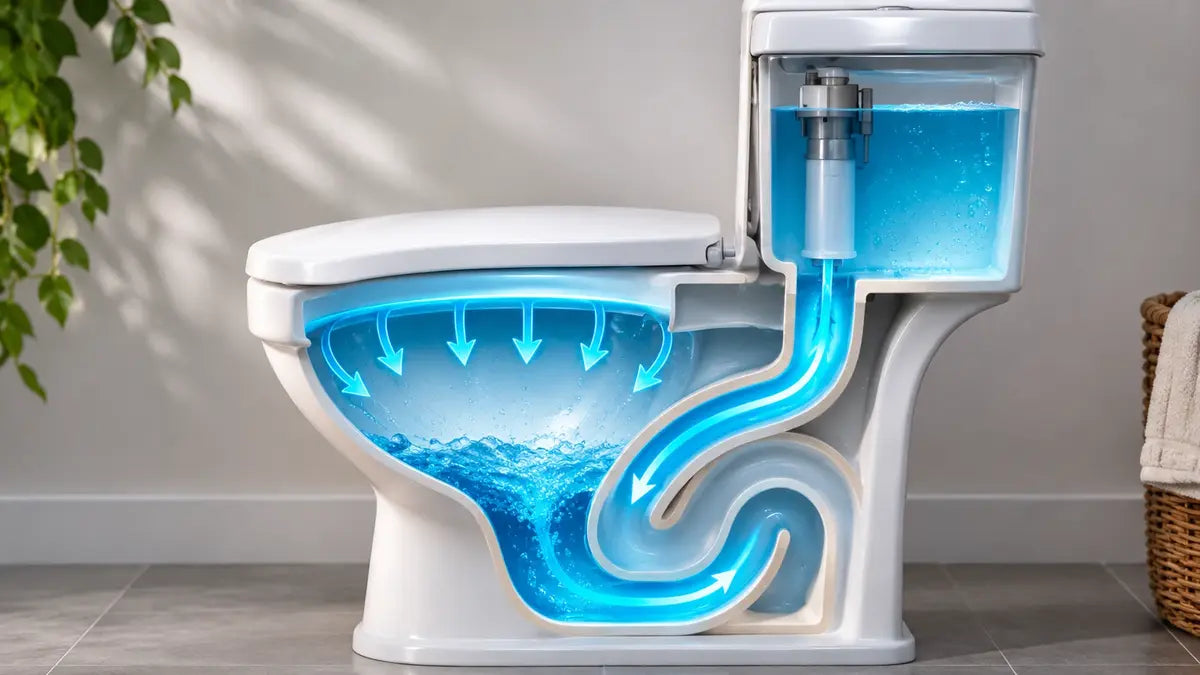
The water is already going to the places that need regular attention.
What if those ordinary flushes could also carry a small amount of cleaner into the bowl?
Not as another chore to remember.
Not as another bottle to take out every morning.
But as part of the routine that is already happening every day.
A cleaning method that continues between cleaning days.
That is the idea behind a slow-dissolving in-tank cleaning method.

- Instead of applying all the cleaner to the bowl in one session, a solid tablet gradually releases cleaning ingredients into the tank water.
- Each time the toilet is flushed, some of that treated water flows into the bowl.
- The formula contains cleaning agents that help loosen and carry away everyday residue.
- And the tablet continues dissolving during normal use, delivering more cleaner on subsequent flushes.
The important difference is not simply how much cleaner is used in a single session.
It's when the cleaner is delivered.
Rather than waiting until a new ring has become obvious, the method adds a maintenance step between regular cleans.
And because the toilet already flushes throughout the day, the process doesn't require someone to apply cleaner every single time.
This doesn't make a regular toilet brush unnecessary.
It doesn't turn every old mineral deposit into an easy-to-remove stain.
But it addresses a different part of the problem:
Helping maintain the clean-looking result after the initial scrub.
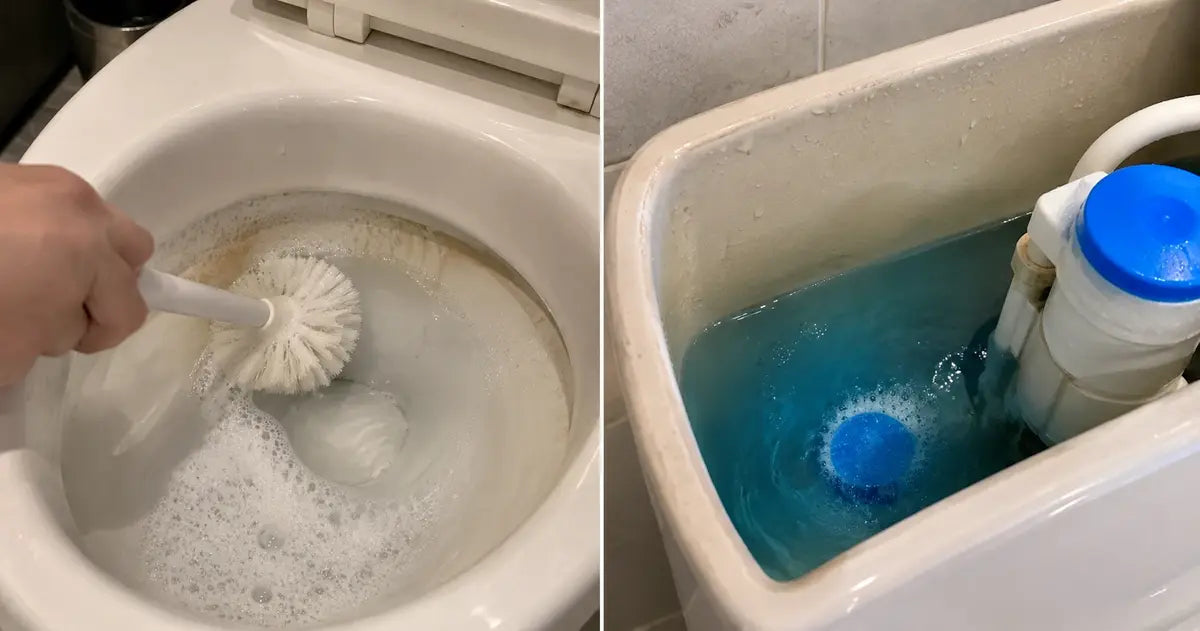
The only remaining question was how to turn that approach into something families could use at home without changing their normal bathroom routine.
A dedicated cleaning brand offers a simple way to do just that.
A premeasured tablet formulated to dissolve gradually inside the tank and deliver its cleaning ingredients as water moves into the bowl.
And the appeal is straightforward:
Instead of doing another separate cleaning job every day, the toilet's normal flush becomes part of its maintenance routine.
The tablet contains four cleaning ingredients that help tackle ordinary grime and residue.
Here is how the formula works:
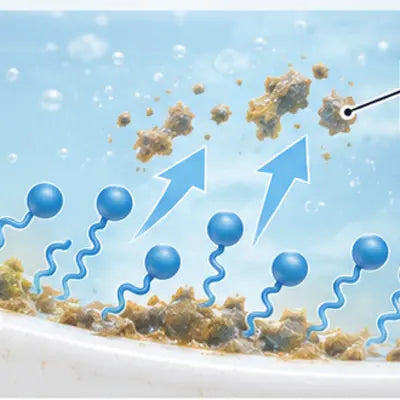
Sodium dodecylbenzene sulfonate, the main surfactant, helps loosen grime so water can carry it away.
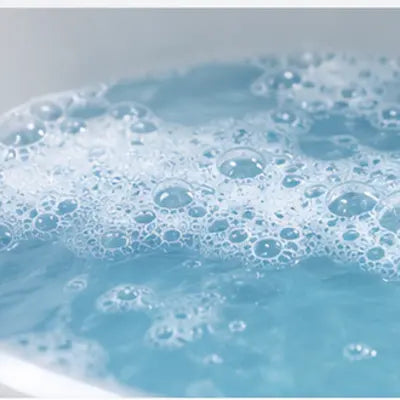
Cocamide DEA supports the foaming action of the cleaning formula.
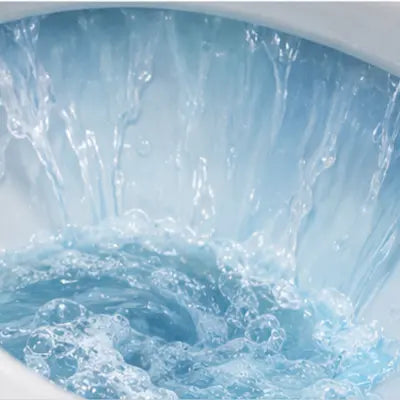
Sodium laureth sulfate helps the cleaning solution wet surfaces and lift everyday residue as water moves through the bowl.
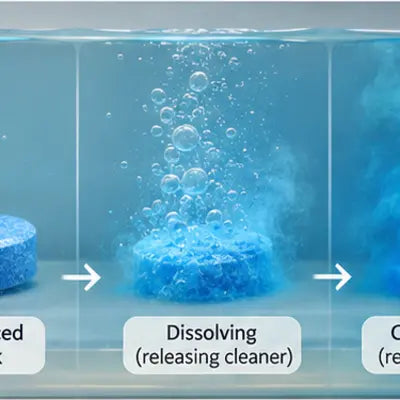
Sodium lauryl sulfate provides additional surfactant cleaning and foaming action.
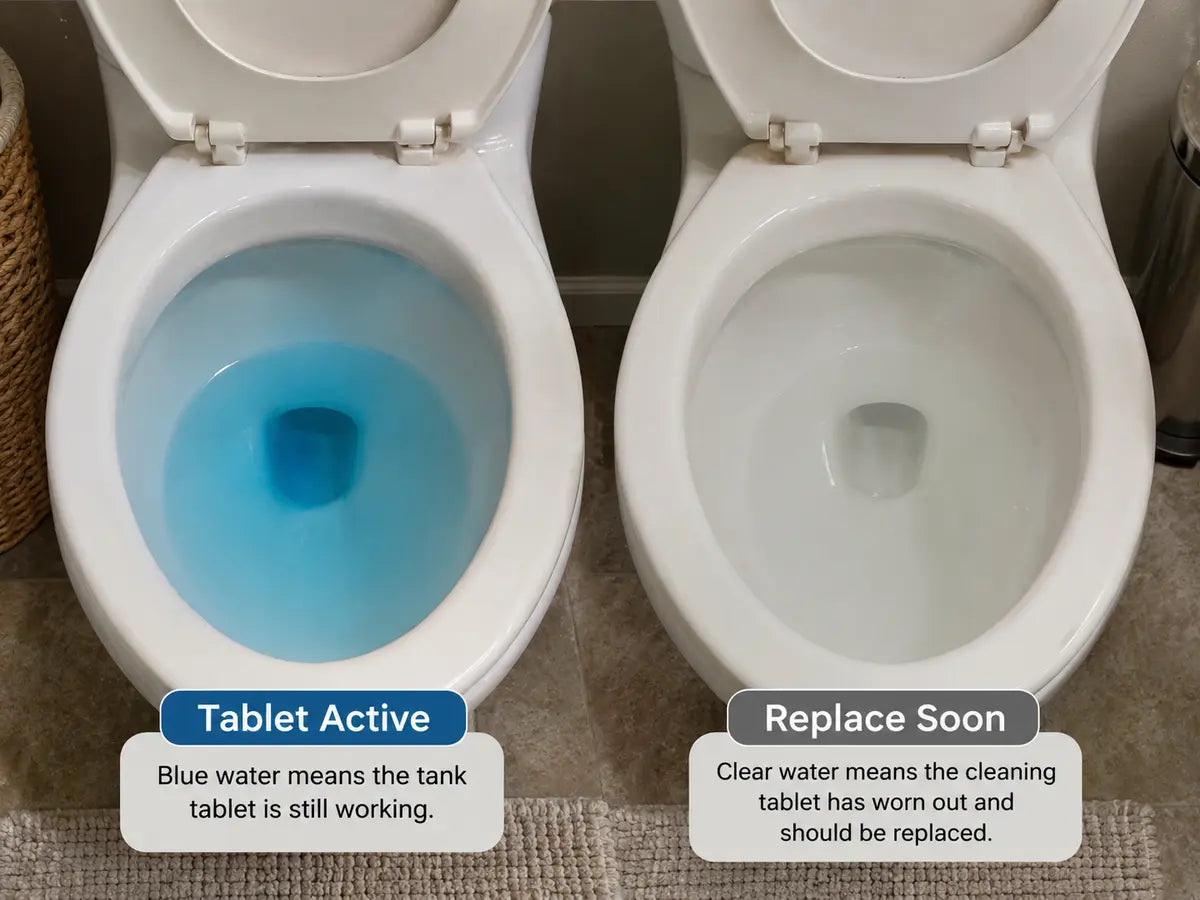
These cleaning agents work together as the tablet dissolves. A blue colourant provides a visible replacement reminder, and the formula adds a light, fresh fragrance.
The blue colour is not itself what cleans the toilet.
And it isn't a test of whether the bowl is disinfected.
It simply helps you see when it is time to replace the tablet.
The process is especially appealing for households where the toilet is used frequently and the clean-looking result never seems to last until the next cleaning day.
Because the cleaner is being delivered as part of a routine that's already happening.
Every time the toilet is flushed.
If you have ever wondered why your toilet looks spotless for a moment and then slowly develops the same familiar ring...
This may be the missing step in your cleaning routine.
That solution is available from a Canadian cleaning brand you may have seen online:
BLITZ Automatic Toilet Bowl Cleaner Tablets.

BLITZ is a family-run cleaning company based in Laval, Québec.
Its automatic toilet bowl cleaner is designed around a different approach to ordinary toilet maintenance.
Rather than relying entirely on the next manual cleaning session, the tablet is placed inside a compatible toilet tank, where it gradually dissolves.
No measuring out liquid cleaner every day.
No separate application with every flush.
And no complicated change to the way your household uses the bathroom.
The routine is straightforward.
Start with a clean bowl. If a heavy ring is already there, remove it with the appropriate cleaning method before adding the first tablet.
Once any other cleaner has been thoroughly flushed away, lift the tank lid and place one BLITZ tablet in the tank water according to the label, away from the flush valve and other moving components.
Put the lid back and continue flushing normally.
When the blue colour disappears, it's time to add a new tablet.


For people who are tired of watching the same ring return, the result they are looking for isn't just blue water.
It's a bowl that stays cleaner-looking between their regular scrubbing sessions.
Customers reviewing BLITZ on its official product page have described just that: a more presentable bowl between cleaning days and a convenient routine that doesn't require a separate daily application.
In a 2026 survey of 37 BLITZ customers, the company reports that 95% noticed a cleaner-looking bowl, 92% noticed improved freshness, and 86% noticed reduced residue and mineral buildup. These are self-reported experiences; results vary.
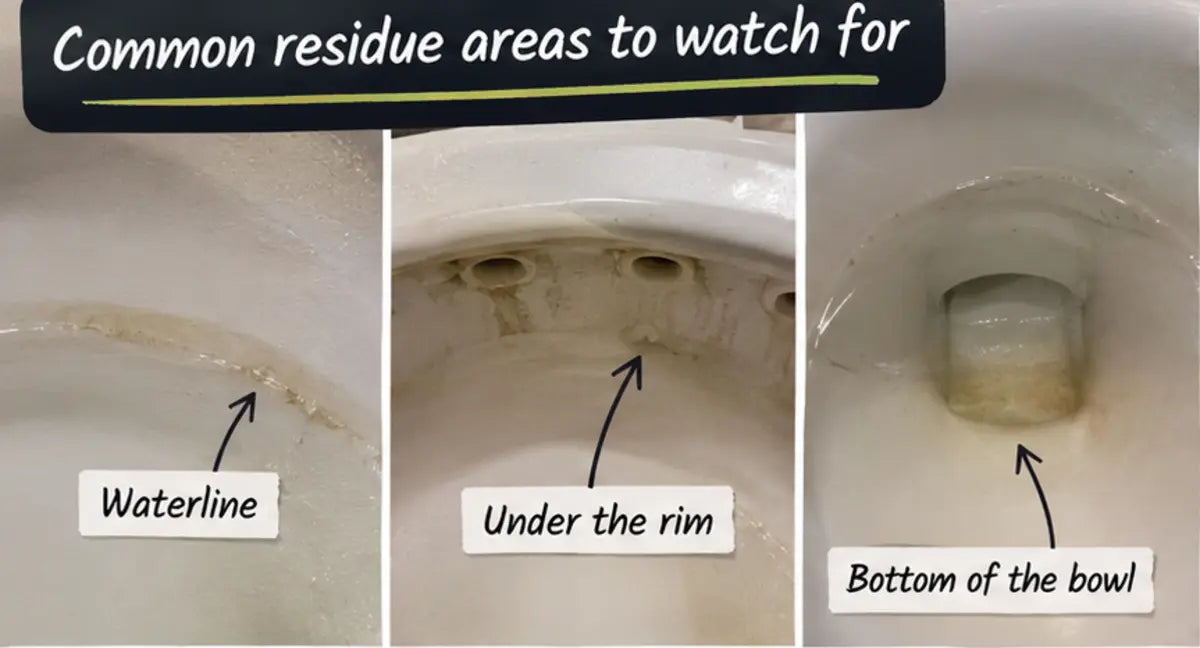
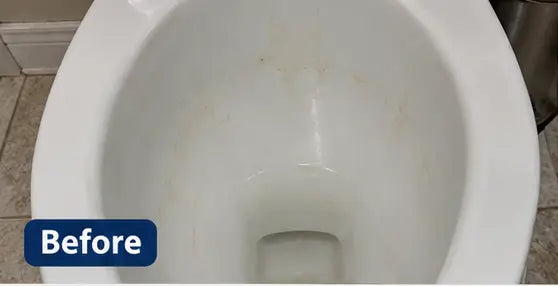
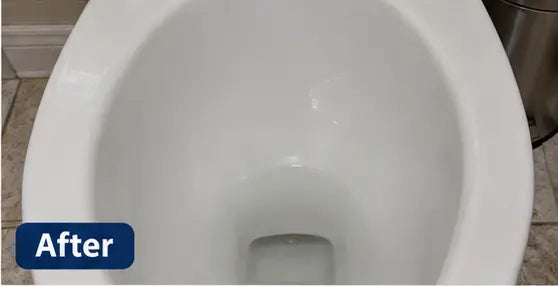
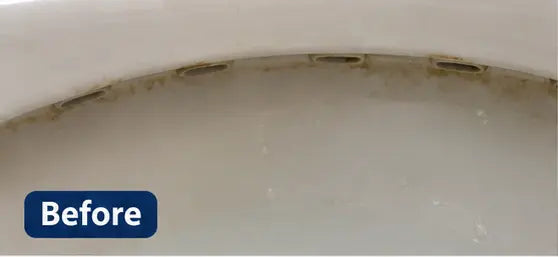
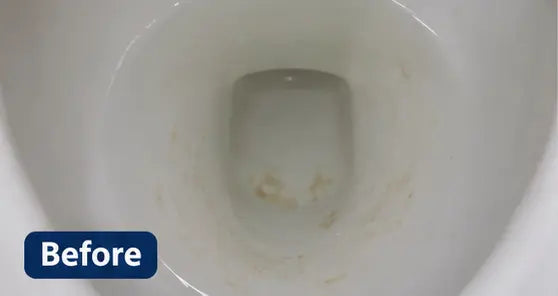
Here are the areas where ordinary toilet buildup is most noticeable, and where a cleaner bowl makes a visible difference.
Ring at the Waterline
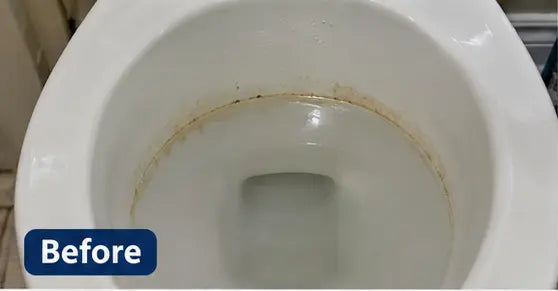
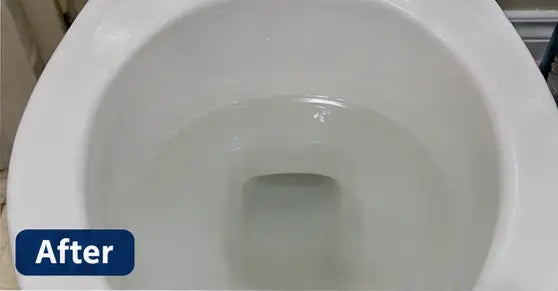
Stains in the Bowl
Buildup Under the Rim
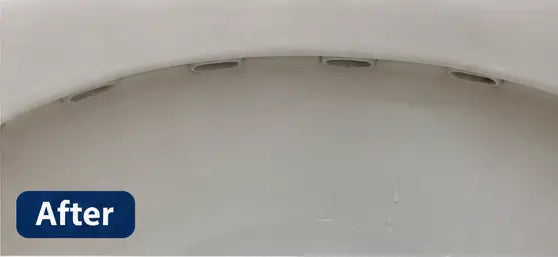
Stains at the Bottom

If you want to see whether the every-flush cleaning method can make a difference in your own bathroom, you can find it through the official BLITZ website.
The deal below is available exclusively on the official BLITZ website.
And right now, there's a limited introductory offer for new customers.
Buy 2, Get 1 Free36 tablets, your best value for a fresher bowl between cleaningsKeep your toilet on its normal cleaning schedule and let the tablets keep the bowl fresher in between, rather than waiting for the ring to return.
BLITZ also offers a 30-day money-back guarantee.
You can check availability and current pricing through the link below.
Click here to see if BLITZ Automatic Toilet Bowl Cleaner Tablets are in stock Check Availability