



How to Remove Fingerprints from a Stainless Steel Fridge (Without Streaks)
Find the grain, then wipe the door top to bottom, with the grain, using a damp microfibre cloth and warm water with a drop of dish soap. Rinse with a clean damp cloth and dry right away with a dry microfibre: soap and water left to dry are what cause streaks. On a fingerprint-resistant door, stop there: its factory clear coat does the rest. On plain stainless, finish with BLITZ Ceramic Coating: a water-repellent finish so new prints wipe off faster, for up to 12 months.

Shop BLITZ Ceramic Coating, $38.99
In this guide
How to remove fingerprints from a stainless steel fridge, step by step
Fingerprints are skin oil. Water alone smears it; a drop of dish soap lifts it, and drying right away prevents streaks.
You need: warm water with a drop of mild dish soap, and three clean microfibre cloths (wash, rinse, dry). Time: about five minutes a door, by our estimate.

- Find the grain. Look at the door in side light for fine parallel lines. Every stroke follows them. Whirlpool's instruction is to "always rub evenly in the direction of the grain," and Samsung Canada says to wipe along the grain too. No visible lines (many coated doors)? Use straight top-to-bottom passes, never circles.
- Wash. Wring the soapy microfibre until it's only damp. Work top to bottom in overlapping strokes, and give the handle area a second pass.
- Rinse. Repeat with a second cloth dampened in clean water. Frigidaire's directions for Smudge-Proof stainless include this rinse, and LG says to wipe with a clean damp cloth after any detergent to prevent streaking.
- Dry and buff right away. Use a dry microfibre, with the grain, before any water dries on its own. GE says to wipe the surface dry to avoid streaking or water spotting, and Whirlpool warns that water left on the metal can cause discoloration.
- Optional, plain stainless: coat it. A ceramic coating keeps the next prints from sticking (see keep fingerprints off longer). On a fingerprint-resistant door, stop at step 4.
Careful: Never spray water or cleaner straight onto the door. Samsung says to put a little on the cloth instead, and warns that a stainless cleaner can erase the printed letters on a dispenser display.
How to get rid of streaks after cleaning stainless steel
Streaks are almost always something left on the surface. The usual causes:
- Soap or cleaner left to dry. Fix: one pass with a clean damp cloth, then dry.
- Water left to air-dry. Its minerals stay behind as spots and lines. Fix: always dry with a separate cloth. Check how hard the water is in your city.
- Wiping in circles or across the grain. Fix: redo the door with the grain.
- Paper towels or a dirty cloth. Whirlpool and GE list paper towels as do-not-use on fingerprint-resistant doors.
- Glass cleaner. Samsung says it can leave streaks; GE lists window sprays as do-not-use.
- Too much polish or oil. A rainbow, oily haze. Fix: wash it off with dish soap, rinse, dry.
Tip: Fold each microfibre in four. You get eight clean faces per cloth: turn to a fresh one as soon as it stops gliding.
Smudge, streak, haze or scratch? Tell them apart first
Not every mark wipes off. A scratch across the grain or a dull patch on a coated door is damage, and scrubbing makes it worse.

Smudges and streaks on a real fridge door:

Fingerprint-resistant stainless: what Whirlpool, Samsung, LG, GE and Frigidaire say
Many fridges now have a factory clear coat over the steel, sold as fingerprint-resistant or smudge-proof. Prints show less, but the rules change: Whirlpool warns that the wrong products "may scratch and/or dull the clear coat." GE and Whirlpool give black stainless the same care.
Which do you have? Look up your model number (on the label inside the fridge or in your paperwork) on the maker's site: the finish is usually in the colour or finish name. Samsung lists the RS27T5200SR, for example, as "Fingerprint Resistant Stainless Steel."
| Maker and finish | What they say to use | What they say to avoid |
|---|---|---|
|
Whirlpool Fingerprint Resistant Stainless |
Warm water and mild soap, then a microfibre to polish and dry, with the grain. Polishes: traditional stainless only. | Scouring pads, abrasive or harsh cleaners, chlorine bleach, steel wool, paper towels, ammonia, citrus or vinegar-based cleaners, oven cleaners. |
|
GE Fingerprint Resistant Stainless |
Soft cloth, sponge or microfibre and mild detergent in warm water, then wipe dry. | "DO NOT use Stainless Steel cleaners on the door surfaces." Also paper towels, scouring pads, window sprays, ammonia, bleach, plant oil, vinegar and oven cleaners. |
|
Frigidaire Smudge-Proof (from its range care page) |
Soft cloth with mild dish detergent and water, or a 50/50 vinegar and water solution; rinse with clean water, dry. | Appliance cleaner, stainless steel cleaner, or cleaners with abrasives, chlorides, chlorine or ammonia. |
|
Samsung Fingerprint Resistant |
Microfibre or a damp cloth with mild detergent, dried thoroughly, along the grain. Cleaner on the cloth, not the door. | Brushes, scouring pads, glass cleaner; benzene, thinner, bleach, alcohol, acetone, ammonia "can erode the protective coating." |
|
LG "Fingerprint and smudge resistant finish" |
A soft cloth dampened with water; after mild detergent, a clean damp cloth to prevent streaking. | Abrasive brushes, toothpaste, bleach, chlorides, alcohol, thinner, acetone, benzene. |
Samsung and LG don't give separate rules for their coated finishes in the pages we found, so soap and water is the safe common ground.

Can you use oil or polish on a stainless steel fridge?
On plain, uncoated stainless, sometimes. On a coated door, no.
- Whirlpool recommends polishes or brighteners for traditional stainless, but "only use products that were designed for use on stainless steel," and keeps polish off plastic trim and rubber door gaskets.
- Samsung's care sheet suggests a stainless steel polish once a month, wiped along the grain.
- GE lists citrus or plant oil-based cleaners as do-not-use, even on plain stainless, so kitchen oils like olive oil are out on a GE.
The popular mineral-oil trick (a few drops on a dry microfibre, buffed with the grain) follows the same rule: plain stainless only, and very little. Polish and oil wear off: Samsung's care sheet says to polish monthly, while one coat of BLITZ Ceramic Coating lasts up to 12 months. Comparing sprays, wipes, polishes and oils? See how to choose a stainless steel cleaner.
How to keep fingerprints off a stainless fridge longer
You can't stop hands touching a fridge, but you can make prints show less and wipe off faster.

On plain stainless, a protective coating changes the surface itself. BLITZ Ceramic Coating leaves an invisible, water-repellent finish, so fingerprints and water spots wipe away faster. It goes on a door that's already clean.
Good to know: BLITZ Ceramic Coating is made for plain stainless. A fingerprint-resistant, Smudge-Proof or black stainless door already has a factory clear coat, so it needs only soap, water and a dry microfibre.
On a plain stainless fridge:
- Clean and dry the door with the steps above: dish soap, a rinse and a thorough dry give the coating a clean surface to bond to.
- Spray a light, even coat, one section at a time, away from the display and controls.
- Buff with the included microfibre cloth, with the grain, until no residue shows. Once buffed, it's invisible.
- Let it cure about 2 hours before anyone touches it. After that, clean as usual.
It protects for up to 12 months; BLITZ notes that high-touch spots like fridge handles may need a refresh sooner.
The same stainless appliance panel, before (left) and after (right) the coating:

Why BLITZ for a plain stainless fridge
- One kit, a whole kitchen. A 236 mL spray and a microfibre cloth for $38.99, covering up to 1,000 sq ft. A 36-inch fridge front is about 18 sq ft (36 by 70 inches), so one bottle goes a long way.
- Up to 12 months per coat, with a short ingredient list: deionized water and PTFE.
- Rated 4.9 out of 5 (16 reviews) on goblitzclean.com. One wrote that it "really cut down on the fingerprints on my fridge."
- A Québec company in Laval, service in French and English. Free shipping from $40 ($7.95 below), most orders in 2 to 3 business days, 10% back in store credit, 30-day money-back guarantee.
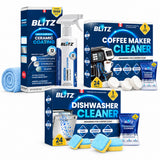
- Doing the whole kitchen? The Kitchen Kit ($69.95) adds dishwasher and coffee maker cleaner and ships free.
Shop BLITZ Ceramic Coating, $38.99
Frequently asked questions
What is the best way to remove fingerprints from a stainless steel fridge?
Warm soapy water on a damp microfibre, with the grain, then a clean damp rinse and an immediate dry. It's the method Whirlpool, GE and Frigidaire give, and it's safe on coated finishes too.
Why does my stainless steel fridge streak after I clean it?
Something is drying on it: soap, cleaner, polish or tap water. Wipe with a clean damp cloth, then dry right away with a dry microfibre, with the grain. Skip glass cleaner (Samsung says it can streak) and paper towels.
Can I use vinegar on a stainless steel fridge?
It depends on the maker. Whirlpool and GE list vinegar-based cleaners as do-not-use, while Frigidaire's care page for its ranges allows a 50/50 vinegar and water solution on Smudge-Proof stainless. When in doubt, dish soap and water does the job.
How do I know if my fridge has a fingerprint-resistant finish?
Search your model number on the maker's site: the finish name says so, like Samsung's "Fingerprint Resistant Stainless Steel" or Frigidaire's "Smudge-Proof." If it does, soap and water is all it needs: the factory coat already does the job of a polish or coating.
Does a ceramic coating keep fingerprints off?
On plain stainless, it leaves a water-repellent finish so prints show less and wipe off faster, for up to 12 months. The handles go from a soapy wash to a quick pass with a dry microfibre.
Can I put a ceramic coating on a fingerprint-resistant fridge?
No need: that finish already has a factory clear coat that does the same job. BLITZ Ceramic Coating is made for plain stainless; on a coated door, soap, water and a dry microfibre are all it needs.
Read next: How to Choose a Stainless Steel Cleaner for Your Kitchen · Holiday Kitchen Cleaning: Before, During and After Hosting
Sources: Whirlpool, GE Appliances (manual 49-1000472), Frigidaire Canada, Samsung and LG support, care and product pages, Best Buy Canada, and the BLITZ product page, checked October 20, 2026. Whirlpool, GE, Frigidaire, Smudge-Proof, Samsung and LG are trademarks of their owners. BLITZ is not affiliated with them.
FEWER FINGERPRINTS, FASTER WIPES
BLITZ Home Ceramic Coating Spray Kit
Spray, buff, let it cure about 2 hours. An invisible, water-repellent finish on stainless steel, glass, granite and tile, so fingerprints and water spots wipe away faster, for up to 12 months. 236 mL plus a microfibre cloth, $38.99. Not for floors.


