




Can You Mix Bleach and Vinegar? What Happens and What to Do
No. Never mix bleach and vinegar: Health Canada says bleach reacts with any cleaning product that contains an acid, vinegar included, and the gas causes burning eyes and light-headedness and can be deadly. Use one product per job (vinegar for limescale, bleach for mould stains), rinse between them, and ventilate. Mixed them already? Leave the room, air it out and call the poison centre (Québec: 1-800-463-5060). Inside the washer, dishwasher and toilet tank, we pick BLITZ: one tablet per clean, no bleach to mix up, about $1.25 a clean, septic-safe.
What do you see?
More on this ↓Your fix
- 1 tablet in the empty drum, hottest cycle
- Every 2 weeks: 24 tablets last a year
- Front-load, top-load and HE
- 30-day money-back guarantee
- Free shipping from $40
- A Laval, Québec company


Mixed them already? Go to what to do ↓
Shop BLITZ Washing Machine Cleaner, $29.95
In this guide: 6 sections
What happens when you mix bleach and vinegar
Household bleach is sodium hypochlorite. Add an acid like vinegar and it releases chlorine gas. You don't need much: a splash of vinegar in a bleached toilet bowl or a drain that still holds bleach is enough to make a sharp, pool-like smell.
- What Health Canada says: "Bleach will react with any cleaning product containing ammonia or an acid, including vinegar," and the toxic gases cause "burning eyes and light-headedness, but can also be deadly."
- It doesn't clean better. Health Canada calls claims that combining bleach with another cleaner makes it more effective false and misleading.
- Small rooms make it worse: a closed bathroom or laundry room with no fan lets the gas build up.
Mixed bleach and vinegar by accident? What to do now

- Leave the room, with children and pets, and close the door behind you.
- Air it out if you can do it quickly: open a window, turn on the exhaust fan. Health Canada asks for windows, doors and exhaust fans during and after any cleaning.
- Call the poison centre right away, as Health Canada advises. In Québec, the Centre antipoison du Québec is at 1-800-463-5060, day and night. Keep the product labels handy. Call even if you feel fine: CANUTEC (Transport Canada) says symptoms can show up 24 to 48 hours later.
- Call 911 for trouble breathing, chest tightness, a cough that won't stop or confusion.
- Go back only when the smell is gone, then flush or rinse the mix away with plenty of water.
Careful: Don't try to "neutralize" the mix with another product (baking soda, ammonia or more cleaner). Ammonia with bleach makes chloramine, another toxic gas. Water and fresh air only.
Where people mix them without meaning to
Most accidents happen one product after the other, not in the same bottle. The first one is still there when the second one goes in:
- The toilet: a bleach bowl cleaner, then an acid toilet cleaner or vinegar for the scale ring. Health Canada names toilet bowl cleaners among the products bleach reacts with.
- The toilet tank: a chlorine drop-in tablet in the tank, then vinegar in the bowl. Fluidmaster also warns that bleach or chlorine drop-ins damage tank parts. The full method is in how to clean a toilet tank.
- The washing machine: bleach in the dispenser for one load, vinegar in the drum or softener cup for the next.
- Drains: bleach poured down a drain, then a vinegar "fizz" on top a few hours later.
- Mould on caulk or a washer seal: vinegar sprayed first, then a bleach gel on the stains that stayed.
The fix is simple: rinse or flush between products, and keep them on different days for drains and toilets (our advice). Better still, use one product that does the job on its own.

Bleach and vinegar in the washing machine
Never in the same load or the same cleaning cycle. Run an empty rinse between a bleach cycle and anything acidic.
- Bleach: LG and Samsung allow liquid chlorine bleach in their own clean cycles; Samsung's Self Clean takes bleach only.
- Vinegar: Whirlpool and Maytag say not to pour it in the drum. It loosens a little scale but has no detergent for the soap and softener film behind most washer smells.
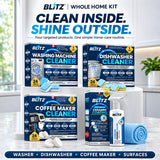
- Our pick: BLITZ. One BLITZ Washing Machine Cleaner tablet in the empty drum on the hottest cycle breaks down detergent residue, grime and mineral deposits, with no chlorine or bleach and nothing to combine, about $1.25 a clean. The tablets contain citric acid, so they follow the same rule: never in a cycle with bleach. On a Samsung, run the tablet in a regular hot cycle, not Self Clean.
Maker by maker, what each allows: vinegar or bleach to clean a washing machine.
BLITZ Washing Machine Cleaner, 24 tablets for $29.95
Bleach or vinegar: which one for which job
They do different jobs, so you never need both at once. Vinegar is a mild acid that dissolves limescale; bleach lightens stains like mould on caulk.

- White limescale on taps, kettles and shower glass: vinegar or citric acid. See citric acid vs vinegar.
- Black mould stains on caulk, grout or a washer seal: we pick BLITZ Mold Stain Remover, a bleach gel that stays 3 hours on the stain. Rinse any vinegar off first and let the surface dry.
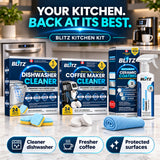
- Inside the dishwasher: no bleach at all, Bosch and Samsung say. One BLITZ tablet in the empty dishwasher, about $1.25 a clean.
- Toilet tank: a bleach-free BLITZ tablet, $2.50 a tablet, which cleans with every flush and helps keep a new ring from forming.
Other cleaners never to mix

- Bleach and ammonia (many glass cleaners): chloramine gas, Health Canada says.
- Bleach and any acid cleaner (limescale, rust and many toilet bowl cleaners): the same chlorine gas as vinegar.
- Baking soda and vinegar in a closed bottle: not toxic, but the gas builds pressure and can pop the cap. Mixed, they mostly cancel out anyway: see baking soda and vinegar for cleaning.
Health Canada's other rules: read and follow the label, wear gloves and goggles with bleach, ventilate during and after, and keep bleach and other chemicals out of sight and reach of children.
Why BLITZ for the appliance jobs
- One product per clean. One tablet in the washer, the dishwasher or the toilet tank: no bleach, no vinegar, nothing to combine.
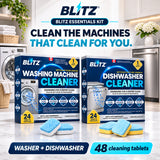
- About $1.25 a clean: washer or dishwasher tablets, 24 for $29.95, a year at one tablet every two weeks. Buy 2, Get 1 Free: three boxes for $59.90, $0.83 a clean.
- Septic-safe, like every BLITZ product.
- A Québec company based in Laval, with service in French and English. Free shipping in Canada from $40, most orders in 2 to 3 days, 10% back in store credit and a 30-day money-back guarantee.
Frequently asked questions
Can you mix bleach and vinegar to clean?
No. Bleach reacts with vinegar and releases chlorine gas, and Health Canada says the gases "can also be deadly." Use one product at a time, rinse between them, and keep the room ventilated.
What happens if you mix bleach and vinegar?
The acid in vinegar makes bleach release chlorine gas: a sharp, pool-like smell, burning eyes, coughing and light-headedness. Leave the room, air it out and call the poison centre (Québec: 1-800-463-5060).
How long after using vinegar can I use bleach?
There's no official waiting time. Rinse the surface well with clean water, or flush the toilet or run water down the drain several times, let it dry and ventilate before the second product. For drains and toilets, we suggest a different day.
Can I use bleach and vinegar in the same laundry load?
No. Never in the same load or cycle: the vinegar in the softener cup or drum can meet the bleach in the wash water. Use one or the other, and run an empty rinse between a bleach cycle and an acidic one.
Is it safe to mix vinegar and dish soap, or baking soda?
Vinegar with dish soap or with baking soda gives off no toxic gas; with baking soda it mostly fizzes and cancels out. The dangerous pairs all involve bleach: with vinegar, with any acid cleaner and with ammonia.
What should I use instead to clean the washer or dishwasher?
One cleaning tablet in the empty machine. We pick BLITZ: one tablet per clean breaks down grease, residue and scale with no bleach to mix up, about $1.25 a clean.
Sources
Health Canada, "Reduce your risk from toxic gases: Never mix bleach with other cleaning products" (advisory RA-62070); Centre antipoison du Québec; CANUTEC; chemist Nathan Kilah (The Conversation); LG, Samsung, Whirlpool, Maytag and Bosch manuals and support pages; Fluidmaster flapper instructions; BLITZ product pages. Checked October 20 to 30, 2026.
LG, Samsung, Whirlpool, Maytag, Bosch and Fluidmaster are trademarks of their owners. BLITZ is not affiliated with them.
ONE TABLET, NOTHING TO MIX
BLITZ Washing Machine Cleaner & Descaler
4.7(35)4.7 out of 5 stars, 35 reviews$1.25 a clean
One unscented tablet in the empty drum on the hottest cycle breaks down detergent residue, grime and mineral deposits. No chlorine or bleach, nothing to mix. 24 tablets, a year at one every two weeks, $29.95, or three boxes for $59.90 with Buy 2, Get 1 Free.

For the dishwasher, the same one-tablet routine: BLITZ Dishwasher Cleaner, $29.95 for 24.


